- HubPages»
- Travel and Places»
- Visiting Africa»
- Travel to Northern Africa
Creating a wildlife garden in Tenerife in the Canary Islands
Tenerife gardens and their wildlife (first published in Living Tenerife, Issue 24, June 2005)
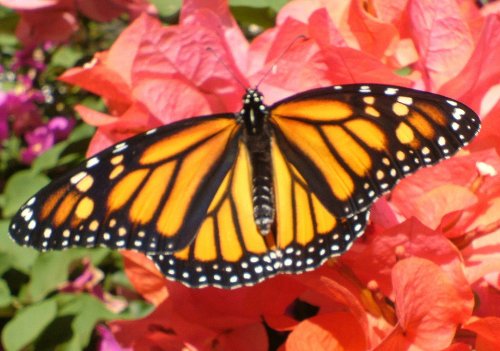
The garden can be an excellent refuge for many forms of animal, and Tenerife has a fascinating range of unusual creatures that may find their way into yours. Everyone loves to see colourful butterflies fluttering in the sunshine and feeding from the blossoms, and in the Canary Islands you are sure to see the majestic Monarch butterfly (Danaus plexippus), which is unmistakeable with its large size and reddish-orange wings, boldly veined with black and dotted with white around the dark outer margins.
Butterflies and moths


Milkweed for the Monarch butterflies
This magnificent insect will sip nectar from many flower varieties and is a common sight around the island. The Monarch's caterpillar feeds on various species of Milkweed (Asclepias spp.) and is a very attractive creature too, banded as it is, with black, cream and yellow stripes, and carrying 2 pairs of sensory tentacles on its head and tail. Milkweed is a poisonous plant but this insect larva turns this to its advantage by incorporating the plant's toxins into its own body, where they help protect it and the adult from predators. The bold markings of the caterpillar and butterfly are known as "warning colours," and they indicate that the owner is poisonous.
In America, another non-poisonous butterfly, known as the Viceroy (Limenitis archippus), so closely mimics the Monarch's colouration that would-be predators may well be fooled and leave it alone.
Attract Monarch Butterflies
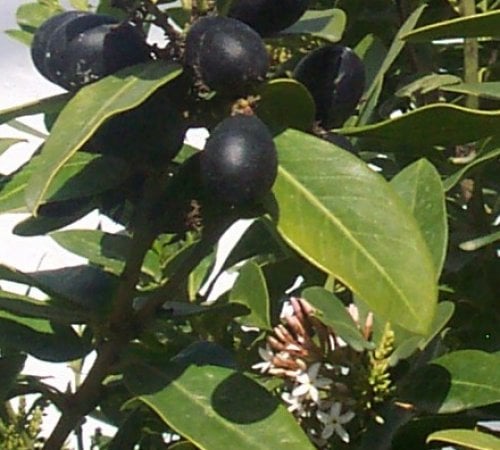
To attract Monarch butterflies to breed in your garden you can grow the red and yellow-flowered Curacao Silkweed (Asclepias curassavia). But it is not only the blossoms of the day that lure insect visitors, because flowers, shrubs and trees that perfume the air at night entice many species of moth to come and feed. The Carissa (Carissa spectabilis) is an ideal ornamental bush that serves this purpose well. It has proved very popular due to the contrast of bunches of small white flowers, the dark-green leaves and black plum-like poisonous fruit.
Hawk Moths
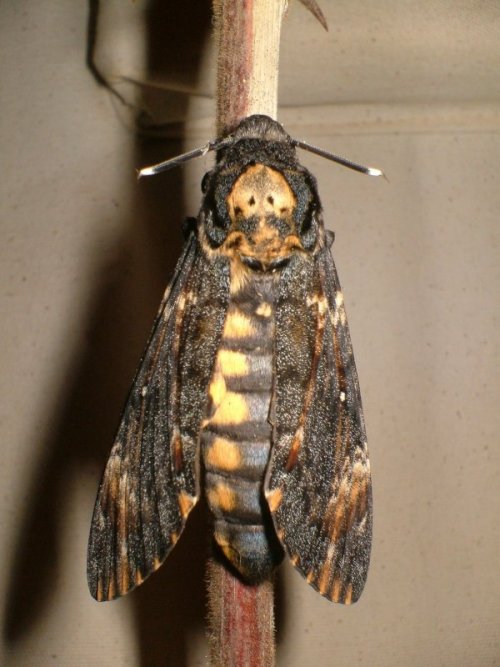
Hawk moths visit this shrub, but a very spectacular and mysterious species, which prefers to raid beehives for honey, and to drink sap rather than nectar, is the Death Head's Hawk (Acherontia atropos). This huge migrant insect has a lot of superstitions surrounding it, due to the skull-like marking on the back of its thorax, and its ability to squeak. It has such a sinister reputation that it was used as an image on posters for the horror movie Silence of the Lambs.
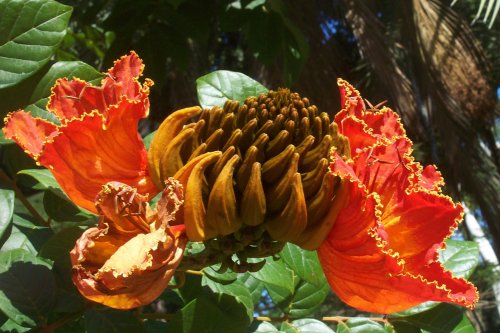
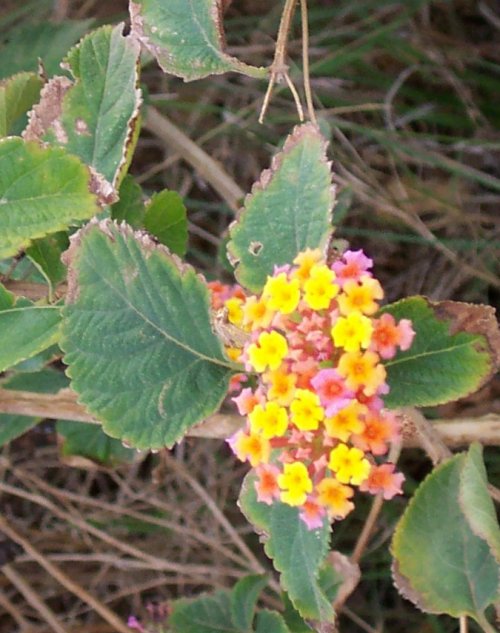
The large caterpillar has a spike on its tail and eats a variety of plants that grow in Tenerife gardens including species of Datura, the Tick Berry or Lantana (Lantana camara), the Tulip Tree (Spathodea campanulata), and the humble Potato.
Where there are insects there are other animals that feed on them, and an insectivorous little mammal that would happily make a meal of a moth pupa or caterpillar is the Hedgehog. We may well associate them with bread-and-milk put out at night on a British lawn, but, somewhat surprisingly, they live on Tenerife too.
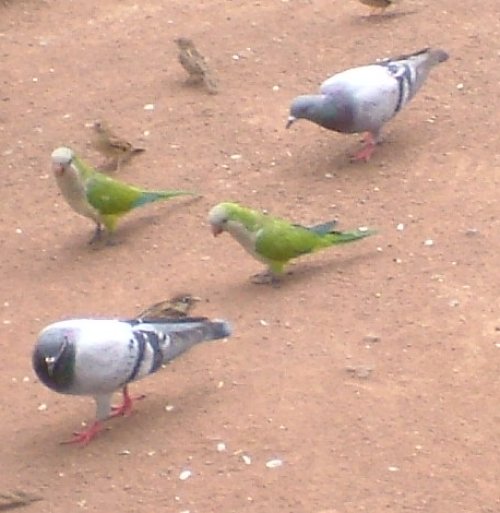
Birds like to eat insects as well, and one type that will be very familiar to many people is the Blackbird (Turdus merula). They are more common in the north of the island but can also be seen in parks and gardens of the south. A far more exotic looking bird is the green Monk Parakeet (Myiopsitta monachus). They often set up home in palm trees but can be somewhat annoying with all the screeching noise they make.
Lizards
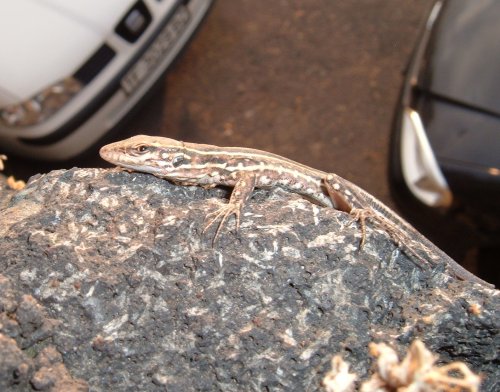
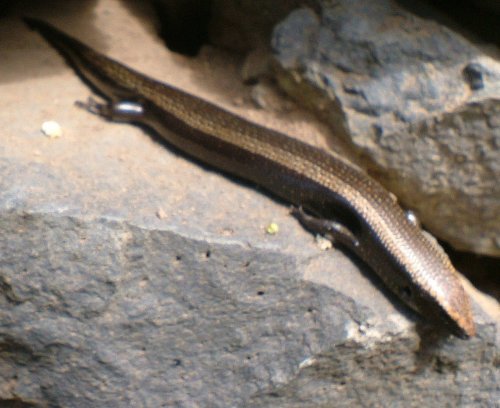
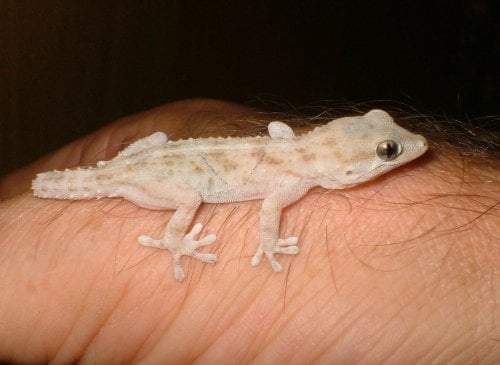
Besides the birds there are several types of reptile you might see in a Tenerife garden. The endemic Tenerife Lizard (Gallotia galloti), the shiny West Canary Skink(Chalcides viridanus) and the rather cute Tenerife Gecko (Tarentola delalandii) and Turkish Gecko (Hemidactylus turcicus) all appreciate a sunny garden stone wall. Lizards, geckos and skinks are the only types of wild reptile in Tenerife, and just like Ireland, it has no snakes. Perhaps one of its many saints banished them too?
Tenerife wildlife
© 2008 Steve Andrews